
The Raven as Mirror
The RavenThis flow follows The Raven’s transformation from external animal into a mirror of the narrator’s interior condition.
increasing Bearing strength in each event
 decreasing
Bearing strength in each eventdecreasingUnfamiliar Bird
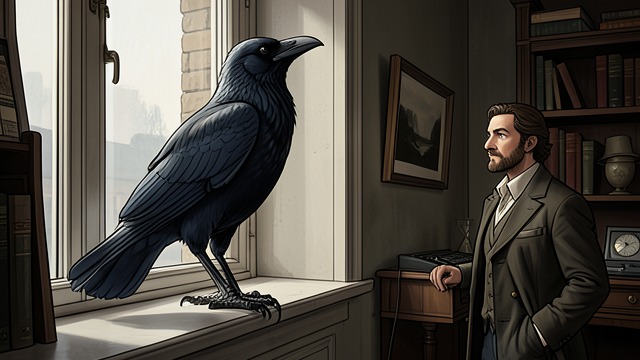
Unfamiliar Bird
Physical Creature
The Raven first appears as an unusually stately bird.
Its material presence keeps open a natural explanation.
Emotional Projection
The narrator immediately surrounds it with ominous descriptions.
The bird’s significance begins in the observer’s imagination.
Decorated Visitor
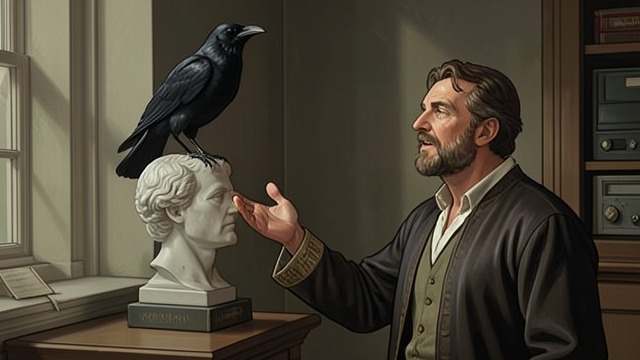
Decorated Visitor
Ceremonial Bearing
The Raven’s grave decorum makes it seem like a dignified guest.
Its composure contrasts with the narrator’s growing agitation.
Projected Authority
The bird has no stated power beyond speech and stillness.
The narrator’s reverence creates its commanding stature.
Ominous Figure
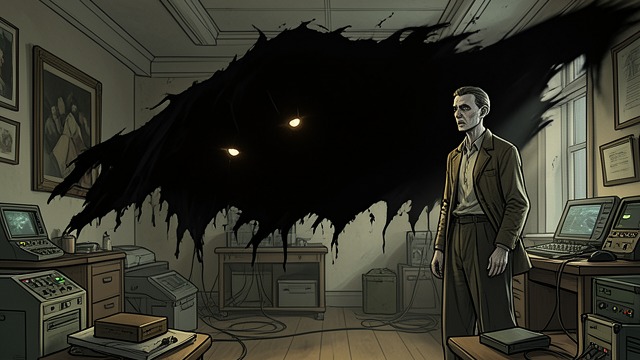
Ominous Figure
Accumulated Adjectives
The narrator calls The Raven grim, gaunt, ghastly, and ominous.
Description becomes a ritual of emotional enlargement.
Mirror of Melancholy
The bird’s darkness reflects the narrator’s own mental atmosphere.
It appears terrifying because it gives shape to what he already feels.
Prophetic Enemy
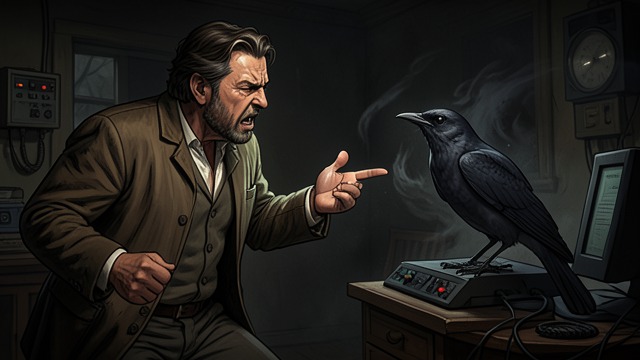
Prophetic Enemy
Moral Recasting
The narrator recasts the bird as prophet, tempter, or devil.
The Raven becomes responsible for the meaning he has drawn from it.
Conflict Externalized
His internal struggle now appears as a contest with an evil messenger.
Accusation protects him briefly from confronting his own projections.
Dreaming Demon
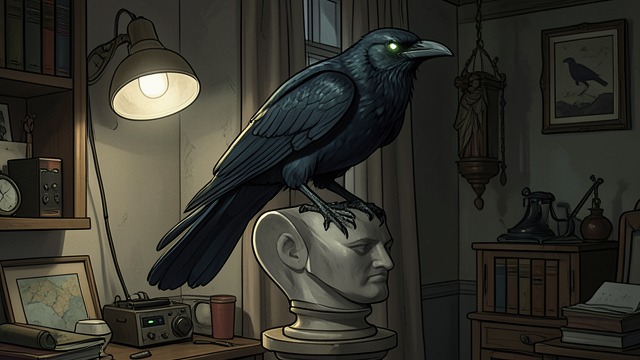
Dreaming Demon
Final Appearance
The Raven’s eyes seem demonic as lamp light streams over it.
Its stillness now resembles supernatural consciousness.
Reflective Finality
The bird remains less a developed character than a fixed image of despair.
Its power is the narrator’s inability to see beyond it.
at the window entrance
during the first examination
during the narrator’s interpretation of the bird
after the denied healing question
at the ending
